Back-and-forth: the everyday game that builds young brains
Researchers call it "serve and return." It is the small back-and-forth between a child and a grown-up: a point, a look, a word, and someone who answers. Here is what the research says, and five easy ways to play it.
What the research says
The Center on the Developing Child at Harvard University describes back-and-forth moments as one of the main ways young brains build strong connections. When a child "serves" (babbles, points, asks) and a grown-up "returns" (looks, names it, answers), the child learns that their thoughts and feelings are heard. The center notes that it can be as simple as a game of peek-a-boo.
Five ways to play it
These steps come from the center’s guide, adapted for busy days. Use any of them, in any language.
- Notice the serve. What is your child looking at, pointing to or reaching for? Get down to their level and look too.
- Return it. A smile, a nod or "You found the ball!" tells them you noticed.
- Give it a name. "That’s a dog. A big brown dog." Naming builds words, in any language your family speaks.
- Take turns, and wait. Pause after you answer. A few seconds of quiet gives them room to answer back.
- Practice endings and beginnings. When your child is done and looks away, let the moment end. A new serve will come.
In Dinoville
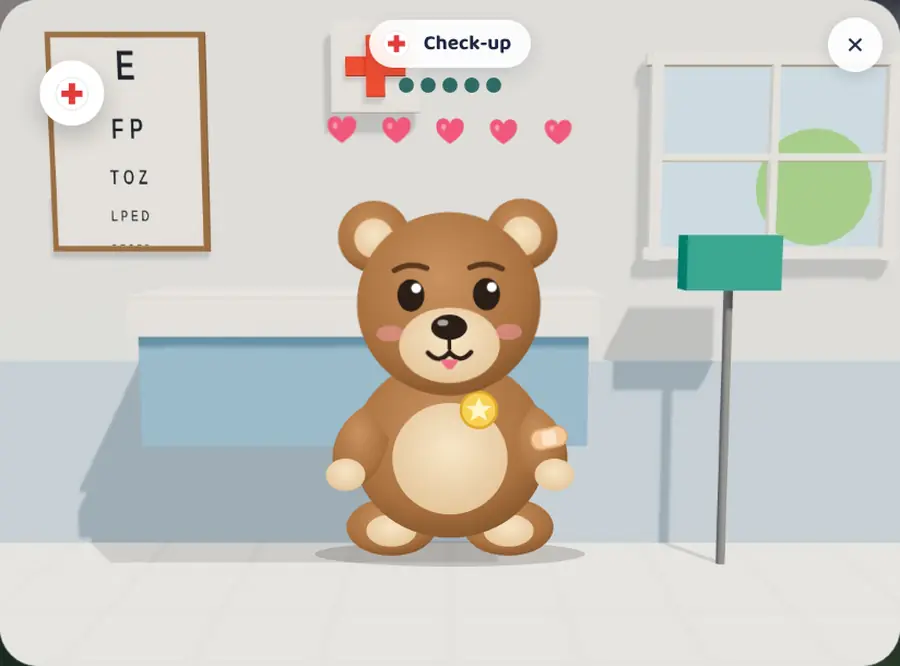
Many places in the game invite this kind of turn-taking. At the doctor’s office, ask your child how the teddy bear feels before they tap. On the map, take turns: you name a place, they find it, then they name one for you.
Sign up on the Dinoville page and we will email one activity a week, in English, French or Spanish.
Sign upSources
- Center on the Developing Child, Harvard University: 5 Steps for Brain-Building Serve and Return
- Harvard Graduate School of Education, Usable Knowledge: How Caregivers Can Boost Young Brains (2017)