Growing up with more than one language
Many families wonder whether two or three languages at home is "too much" for a young child. The research is reassuring, and there is no single right way to do it. Here is what scientists have found, and a menu of ideas to choose from.
What the research says
Studies find that growing up bilingual is not linked to language delay. A bilingual child may know fewer words in each single language at first, but across both languages they usually know as many or more. Mixing languages in one sentence is common and normal, and researchers at the Oxford Brookes BabyLab note it is not a sign of confusion. What matters most is how much a child hears each language, how rich that talk is, and how often they get to use it themselves.
Ideas to choose from
Families use many approaches. "One parent, one language" is well known, but it is not the only one that works. Pick what fits your home, and change it whenever you need to.
- One parent, one language: each grown-up mostly uses one language with the child.
- Home language at home: the family language inside the house, the community language outside.
- Time and place: one language at breakfast, in the car or on weekends.
- Songs and books: lullabies, picture books and rhymes in each language, at bedtime or bath time.
- Video calls with family: grandparents and cousins are often the best language teachers there are.
- Name things together: during play, cooking or walks, say what you see in the language you are practicing.
In Dinoville
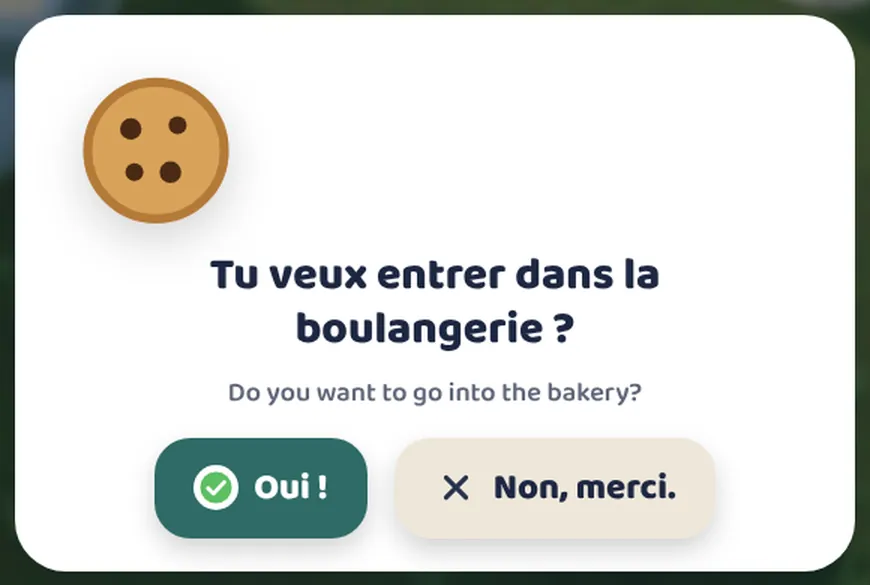
You can set a home language and a language to learn. Places ask their questions in the new language with your home language underneath, so a child can answer in either one. Playing together and saying the words out loud turns it into a shared moment.
Sign up on the Dinoville page and we will email one activity a week, in English, French or Spanish.
Sign upSources
- Byers-Heinlein and Lew-Williams: Bilingualism in the Early Years, What the Science Says (2013)
- Fibla, Kosie, Kircher, Lew-Williams and Byers-Heinlein: Bilingual Language Development in Infancy (2022)
- Hoff: Bilingual Development in Children of Immigrant Families (2018)
- Oxford Brookes BabyLab: Bilingualism myths
- HealthyChildren.org (American Academy of Pediatrics): 7 Myths and Facts About Bilingual Children